-
Mobility: Kick Off Meeting
The Know-How Meeting was held in Germany, hosted by the coordinating school Gemeinschaftsschule Althengstett. Participating teachers, educators, and female students from partner countries came together to share best practices for empowering girls in STEM fields.
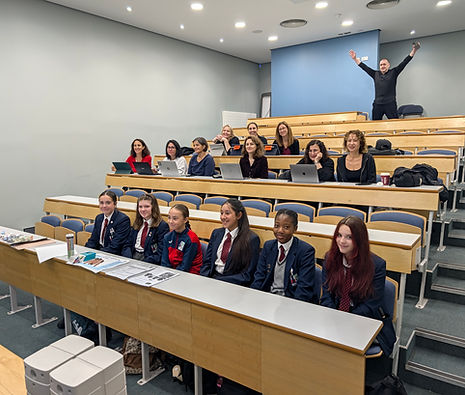
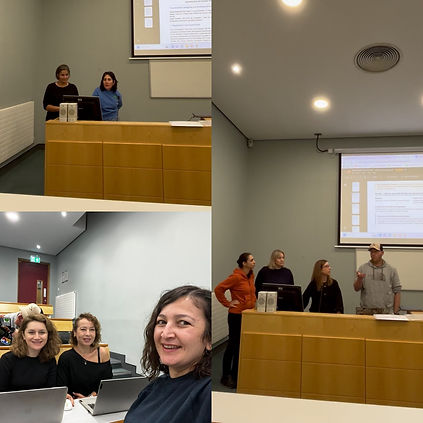
Over the course of the three-day event, students and teachers explored the importance of female role models in science and technology through classroom visits, student presentations, and activities themed around “Gender Equality in STEM.” Portuguese partners presented examples of inclusive STEM practices, while Irish partners shared strategies to increase female students' participation in STEM fields. Thus, successful methods implemented in different countries were evaluated in a mutual learning environment.
As part of the program, students visited Experimenta, one of Germany's largest science centers, where they had the opportunity to explore interactive exhibits, hands-on experiments, and innovative technology areas. By experiencing and reinforcing their scientific curiosity through physics, robotics, and digital simulation applications, the students demonstrated once again that STEM is an accessible and inspiring field for everyone. In addition, cultural events held in the city of Stuttgart strengthened the students' awareness of European citizenship while also reinforcing intercultural ties.
Sustainability efforts were also at the forefront during the mobility process. The Virtual Mentoring Program, designed under the guidance of Irish partners, aims to support female students in their STEM journey even after the mobility period. While teachers collaborated on content planning for the STEM Resource Pool, students produced digital materials for the “Girls in STEM” awareness campaign. In the dissemination session conducted by Aydın BİLSEM from Turkey, it was planned to reach a wide audience with the project outputs through eTwinning, the project website, social media, and Erasmus+ platforms.
This international gathering, which concluded with an evaluation and certification ceremony, was not just a three-day event; it was an important step in a long-term collaboration that supports girls in dreaming, designing, and leading in STEM fields. The “She STEMs the Future” project continues to encourage future scientists and engineers by fostering a culture of solidarity and mentorship across Europe.
Photos


2. Mobility: Gender-Inclusive Teaching Practices And Strategies To Engage Girls In STEM Subjects Teacher Training
As part of the Erasmus+ KA210-SCH project “She STEMs the Future,” a three-day international teacher training programme was held in Letterkenny, Ireland, from 22 to 24 September 2026. The training was hosted by AISR Learning and brought together teachers from the project partner organisations to exchange knowledge, experiences and good practices on promoting girls’ participation in STEM education.
The main focus of the training was “Gender-Inclusive Teaching Practices and Strategies to Engage Girls in STEM Subjects.” Throughout the three-day programme, participants explored different approaches to creating more inclusive STEM learning environments and discussed strategies for encouraging girls to develop an interest in science, technology, engineering and mathematics.
Sharing Experiences and Exploring Inclusive STEM Practices
On the first day, teachers from the partner countries shared their experiences and discussed the challenges and opportunities related to gender equality in STEM education. The sessions provided an opportunity for participants to compare practices across different educational contexts and identify common areas for further collaboration.
The programme also included a visit to a science centre, where participants explored innovative approaches to creating engaging and interactive science learning environments.
Designing Gender-Inclusive STEM Activities
The second day focused on gender-inclusive lesson planning and practical STEM activities. Working collaboratively, teachers developed lesson ideas and classroom activities designed to engage girls in STEM subjects and provide more inclusive learning experiences.
The activities developed during the training will contribute to the project's STEM Resource Repository, allowing teachers and educators from the partner countries to access and benefit from the materials.
Another highlight of the programme was a panel discussion with female STEM professionals. Participants had the opportunity to hear about their educational and professional journeys, experiences and achievements in STEM fields. The discussion highlighted the value of female role models in encouraging young girls to explore STEM-related subjects and career opportunities.
Technology, Role Models and Future Collaboration
On the final day, participants explored how digital tools and technologies can be used to make STEM education more engaging for girls. They also discussed ways of integrating female STEM role models into classroom activities and curricula.
The partners further collaborated on plans for STEM Days to be organised in partner countries, with the aim of raising awareness among students, parents and local communities about the importance of girls' participation in STEM.
The training concluded with an evaluation and feedback session, followed by a certificate ceremony.
The Ireland training provided an important opportunity for the She STEMs the Future partners to learn from one another, develop practical teaching resources and strengthen their international cooperation. The knowledge and materials developed during the training will contribute to the project's ongoing efforts to promote gender-inclusive STEM education and encourage more girls to discover their potential in science, technology, engineering and mathematics.
Photos